
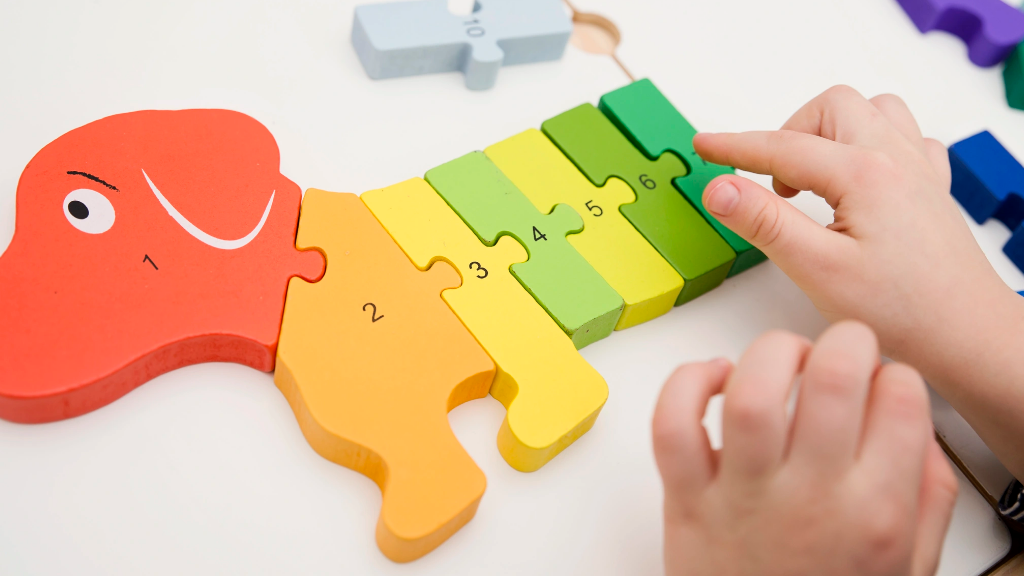
Fine motor skills are the small, precise movements children use for writing, cutting, dressing, and playing with small toys. The best way to build fine motor skills is through short, playful activities that feel like games—not drills.
Below are parent-friendly ideas you can use at home with common household items. Pick 2–3 at a time and rotate them to keep things fresh.
What Fine Motor Activities Build
- Hand strength and endurance
- Finger isolation (using one finger at a time)
- Bilateral coordination (one hand stabilizes while the other works)
- Pincer grasp (thumb + index finger control)
- Visual-motor integration (eyes guiding hands)
10 Simple Activities (Minimal Prep)
- Playdough work: roll snakes, pinch, poke, hide coins or beads, mix colors (try using just one hand)
- Clothespin games: clip onto a box edge or a paper plate “sun”
- Tweezer transfers: move pom-poms or cereal from one cup to another
- Sticker scenes: peel and place stickers to make a picture
- Q-tip painting: dots, lines, or simple shapes
- Coin bank: push coins through a slot (or piggy bank)
- Bead stringing: large beads first, then smaller beads as skills grow
- Hole punch crafts: punch along a line or around shapes
- Pipe cleaner threading: thread into a colander or cardboard holes
- Lacing cards: use shoelaces through punched holes
How to Make It Easier or Harder
You can adjust difficulty without changing the activity.
- Easier: use larger objects, thicker tools, shorter time, more help
- Harder: smaller objects, tweezers/tongs, timed challenges, patterns to copy
Quick Tips for Parents
- Keep sessions short (5–10 minutes) and stop before frustration peaks
- Praise effort and persistence, not perfection
- Choose activities that match your child’s interests (animals, cars, princesses)
- If handwriting is the goal, build strength first—writing gets easier when hands are ready
When to Seek OT Support
If your child avoids fine motor tasks, fatigues quickly, or struggles with age-appropriate self-care skills (buttons, zippers, utensil use), an OT evaluation can help pinpoint what to work on.
FAQ:
Q: How often should we do fine motor activities?
A: A few short sessions per week can help. Consistency matters more than long practice.
Q: What are the best fine motor activities for toddlers?
A: Playdough, stickers, clothespins, and simple transfers with tongs are great toddler-friendly options.
Q: Do these replace occupational therapy?
A: They can help, but OT is recommended when challenges are significant or affecting daily function.