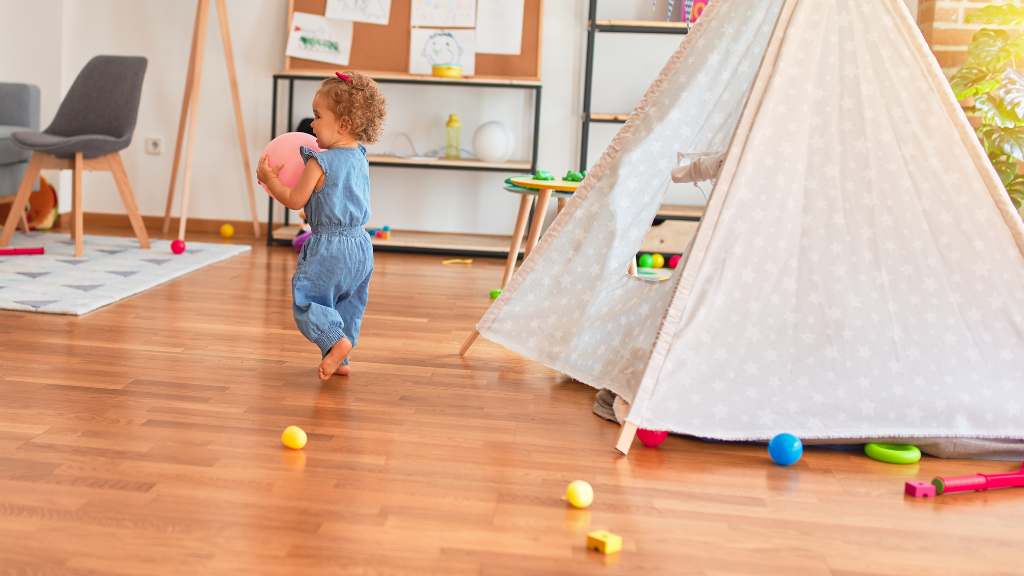
Obstacle courses are one of the easiest ways to build gross motor skills at home—balance, coordination, strength, and motor planning—while keeping kids engaged.
You don’t need fancy equipment. With pillows, tape, chairs, and a little creativity, you can create a course that supports development and burns energy in a positive way.
Skills Obstacle Courses Build
- Core strength and postural control
- Balance and coordination
- Bilateral coordination (using both sides together)
- Motor planning (planning a movement sequence)
- Body awareness and confidence
A Simple Starter Course (10–15 minutes)
- Crawl under a chair “tunnel”
- Step over taped lines or pool noodles
- Walk heel-to-toe along painter’s tape
- Jump over a pillow “river”
- Carry a stuffed animal to the finish line and place it in a basket
Repeat the course 2–3 times and change one step to keep it interesting.
Ways to Level It Up
- Add animal walks (bear walk, crab walk) for strength
- Include targets: toss bean bags into a bucket mid-course
- Use timing: “Can you beat your last time?” (keep it playful)
- Add “stop/go” or “freeze” cues for impulse control
- Create themed missions: rescue the teddy, deliver the pizza, superhero training
Tips for Success and Safety
- Keep surfaces stable; avoid slippery rugs
- Start easy, then increase challenge gradually
- Stop before your child is exhausted or overly dysregulated
- If your child seeks intense crashing, include safe heavy-work steps (push a laundry basket)
When OT Can Help
If your child avoids movement play, falls frequently, gets dysregulated when participating in movement or obstacle courses, or struggles to learn new motor skills, an OT evaluation can help identify the root cause and provide a plan.
FAQs:
Q: How do obstacle courses help kids?
A: They build core strength, balance, coordination, and motor planning while making exercise feel like play.
Q: What if my child gets too wild during obstacle courses?
A: Add calming heavy-work steps and keep sessions short with clear structure.
Q: How often should we do gross motor activities?
A: Even 2–3 times per week can help when activities are consistent and progressively challenging.