Gross motor skills are the big-body movements children use to sit, crawl, walk, run, jump, climb, and play. These skills develop gradually as a child builds strength, balance, coordination, and confidence. Some children move a little later than their peers and catch up quickly, while others show ongoing challenges that affect daily life.
When gross motor skills lag behind expected milestones, children may avoid playground activities, struggle to keep up with peers, or become frustrated during physical play. Recognizing the early signs of gross motor delays can help families seek the right support sooner.
What Are Gross Motor Skills?
Gross motor skills involve large muscle groups in the core, arms, and legs. They include:
• Core strength and postural stability
• Balance and coordination
• Bilateral coordination (using both sides of the body together)
• Motor planning (figuring out how to move through space)
• Endurance for active play and school activities
These abilities support everyday tasks like walking up stairs, getting on and off the floor, riding a bike, and participating in sports, dance, or playground games.
Milestones vs. Individual Differences
All children develop at their own pace, and there is a wide range of what can be considered typical. However, when delays are significant, persistent, or interfere with participation, it may be helpful to seek an evaluation.
A child doesn’t need to be missing every milestone to benefit from support. Sometimes the biggest clue is not a single skill, but a pattern—low endurance, frequent falls, avoiding movement-based play, or difficulty learning new motor tasks.
Common Signs of Gross Motor Delays
Parents and teachers may notice one or more of the following:
- Delayed milestones (rolling, sitting, crawling, walking) compared to peers
- Poor balance (frequent falling, difficulty standing on one foot)
- Low muscle tone or ‘floppy’ posture; tires easily during active play
- Avoids climbing, jumping, running games, or playground equipment
- Difficulty with stairs (needs railing longer than expected; step-to pattern)
- Trouble catching/throwing a ball or coordinating both hands and feet
- Difficulty learning new movement sequences (motor planning challenges)
- Clumsiness that interferes with play or confidence around peers
How Gross Motor Delays Can Affect Daily Life
Gross motor delays can impact more than sports. Children may struggle with sitting upright at a desk, keeping up on field trips, walking long hallways at school, or joining peer games. Some children become hesitant to try new activities because they feel less capable, which can affect confidence and social participation.
You might also see secondary challenges such as frustration, avoidance, or behavior issues—especially when a child is repeatedly asked to do things their body isn’t ready to do yet.
Who Helps with Gross Motor Challenges: OT vs. PT?
Parents often wonder whether occupational therapy (OT) or physical therapy (PT) is the right fit. In many cases, both can help, depending on the child’s needs.
Physical therapists often focus heavily on strength, gait, range of motion, and foundational movement patterns. Occupational therapists may support gross motor development as it relates to daily function—such as posture for seated work, motor planning for playground participation, coordination for self-care tasks, and sensory-motor regulation.
If you’re unsure which is most appropriate, an evaluation can help guide the next step.
How Occupational Therapy Can Help
Pediatric OTs support gross motor and whole-body coordination through engaging, play-based activities. Therapy may include:
• Core strengthening through climbing, crawling, scooter boards, and obstacle courses
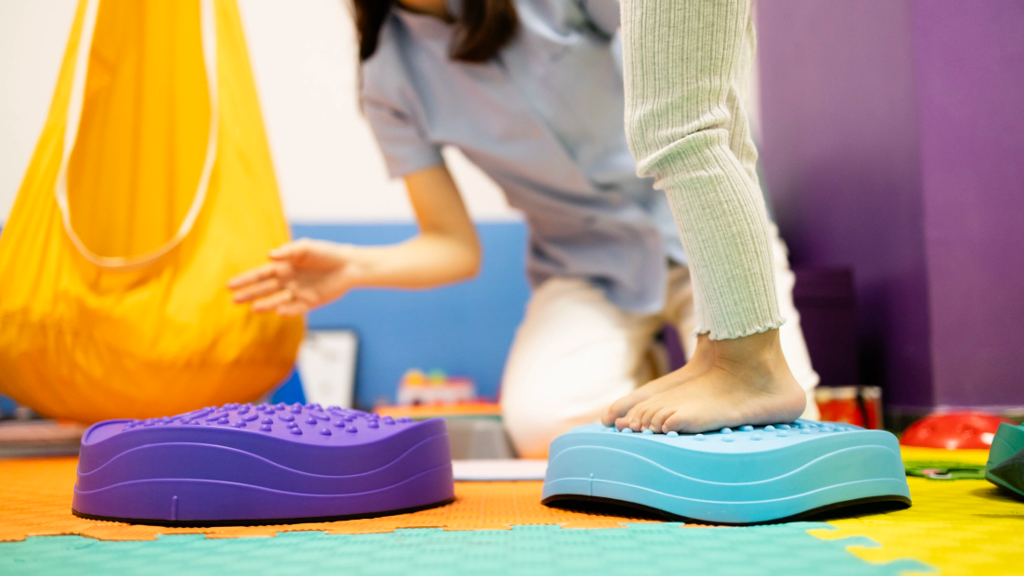
• Balance work using beams, stepping stones, and dynamic surfaces
• Coordination activities that combine arms, legs, and visual tracking (ball games, targets, rhythm games)
• Motor planning practice by breaking skills into small steps and building confidence
• Sensory-motor strategies for children who seek movement or become overwhelmed by movement
At Kids Can Therapy, we focus on practical outcomes: helping children build foundational skills to be able to participate more comfortably and confidently in the activities that matter most.
When to Consider an Evaluation
Consider reaching out if your child frequently falls or bumps into things, avoids active play, tires easily, has difficulty sitting at the table or their desk, or struggles with balance and coordination compared to peers. Early support can help strengthen foundational movement skills and prevent children from developing a long-term pattern of avoidance.
FAQ:
Q: What are signs of a gross motor delay in a child?
A: Common signs include frequent falling, poor balance, low endurance, delayed milestones, and avoiding running, jumping, or climbing.
Q: Can occupational therapy help with gross motor delays?
A: Yes. OT can build core strength, balance, coordination, and motor planning through play-based activities tied to daily function.
Q: When should I be concerned about my child’s gross motor development?
A: If challenges persist, interfere with play or school participation, or your child seems far behind peers, an evaluation can provide clarity.