If your child dislikes handwriting practice, you’re not alone. The good news is that handwriting improves fastest when we strengthen the underlying skills—grip, posture, visual-motor integration, and motor planning.
These activities feel like play, but they build the same foundations needed for clearer letters, better spacing, and less fatigue.
What Handwriting Requires
- Hand and finger strength (endurance for writing)
- A functional grasp and tool control
- Stable posture and shoulder strength
- Visual-motor integration for copying and spacing
- Motor planning for consistent letter formation
8 Activities That Build Handwriting Skills (No Worksheets)
- Write on vertical surfaces: easel, window markers, paper taped to wall
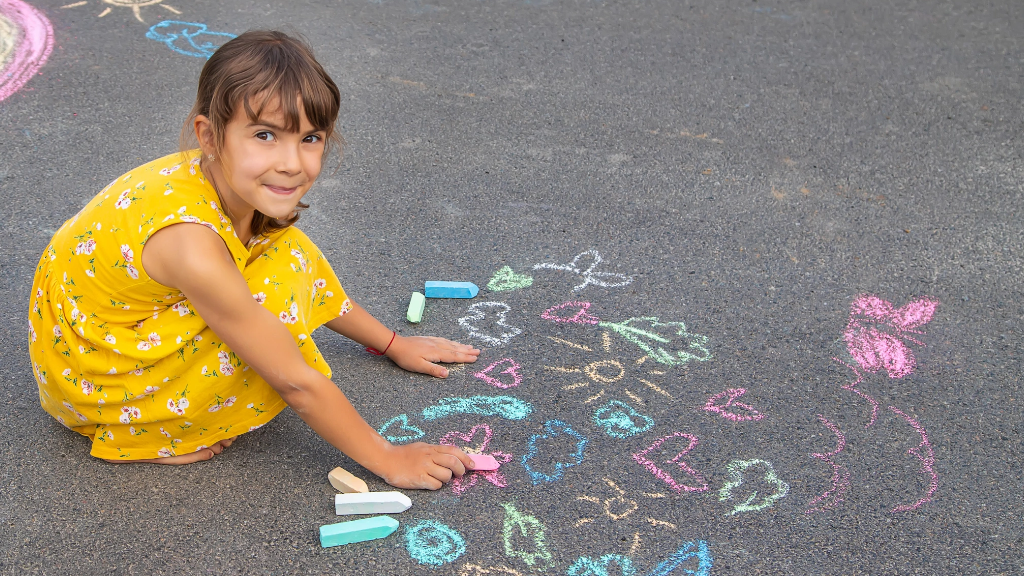
- Chalk and sidewalk games: draw roads, hopscotch letters, target circles
- Playdough letters: roll and shape letters, or “snake” writing
- Q-tip or paintbrush writing: water paint letters on construction paper
- Sand/shaving cream tracing: trace letters with finger for sensory feedback
- Clothespin pickup + trace: clip items then trace shapes/letters
- Maze and dot-to-dot: improves visual tracking and pencil control
- Tiny writing: write small in boxes to build control (short sessions)
Posture Matters More Than Most Parents Expect
Children write best when their body is stable. Try these quick posture checks: feet supported, hips/knees at ~90 degrees, paper angled, and non-writing hand holding the paper.
When to Ask for OT Help
If handwriting is consistently painful, extremely slow, hard to read, or affecting school performance, an OT evaluation can identify what’s driving the difficulty and provide targeted strategies.
FAQ:
Q: How can I improve my child’s handwriting at home?
A: Focus on strength, posture, and pencil control through play-based activities like writing on a wall, chalk games, and sensory tracing.
Q: Is poor handwriting always a problem?
A: Some messiness is normal, but persistent struggles that affect school or confidence may benefit from OT support.
Q: Why does writing on a vertical surface help?
A: It strengthens shoulders and encourages a better wrist position, which supports control and endurance.